Praise for My Books


"Manreet Sodhi Someshwar is a gifted writer of great promise. I have a gut feeling we have a new star rising in Punjab's literary horizon. She has an excellent command of English and a sly sense of humour."
- Khushwant Singh on The Long Walk Home

"An enjoyable tale of a sassy girl's headlong race up the corporate ladder."
- India Today on Earning the Laundry Stripes


Showing posts with label Earning the Laundry Stripes. Show all posts

Thursday, 4 April 2013

Ruth Prawer Jhabvala: RIP and Know, You Rocked This Writer's World!

I woke this morning to the news that Ruth Prawer Jhabvala has died, at the age of 85 in her Manhattan apartment. I read Heat and Dust, her Booker-winning novel, during my school days - graphic, messy, lyrical, it snared me. So much so that when I was writing my debut novel, Earning the Laundry Stripes, Jhabvala's seminal book came to me.


ETLS is the story of a young woman's first year as the first woman Area Sales Manager - selling sabun-chai-tel in the Indian hinterland, Noor Bhalla has several adventures featuring goats as bus companions, Schwarznegger-idolizing distributors, gratis matrimonial advice, a shady cop...

In an early scene Noor is travelling by bus in arid Vidarbha in sizzling May after a misadventure. "My mulmul dupatta covered my head and most of my face. Behind my spectacles, hot tears threatened to spill and completely ruin an already bad day. To distract myself, I concentrated on the terrain, reminding myself that everything was new, that I had never before travelled this tract of land...

Yet, it all looked and seemed familiar. Heat and Dust. Heat&Dust. H&D.

That wonderfully succinct descriptor of India - heat and dust - to which Ruth Prawer Jhabvala has forever lain claim by her Booker Prize-winner, denying future writers the ability to so pithily sum up the great Indian countryside."

http://www.manreetsodhisomeshwar.com/earning-the-laundry-stripes/

RIP Ruth and know, you rocked this writer's world!

P.S. The Guardian carries Ms Jhabvala's obituary - read it for insight into the writer and for a master class in writing!


Wednesday, 22 June 2011

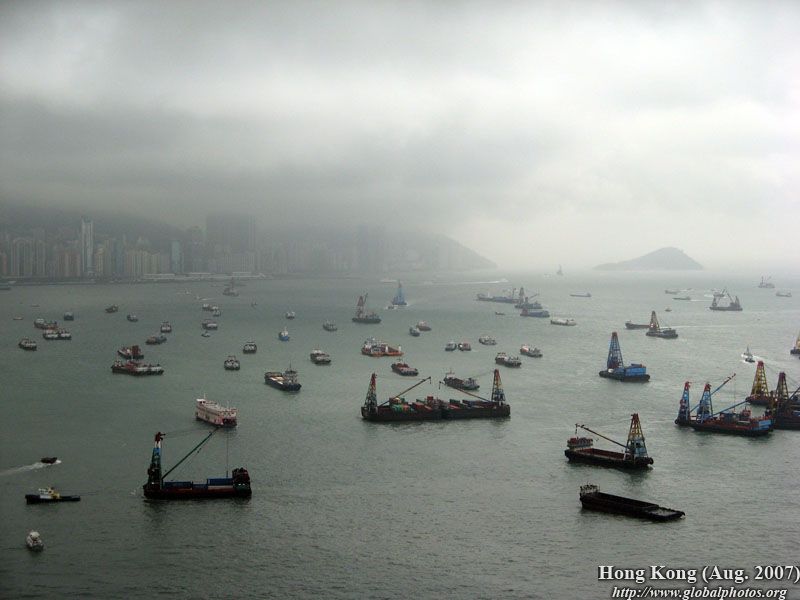
Weather in fiction, beyond the dark and stormy night …

As I sit curled up in bed with a cup of coffee and the IHT, I watch the curtain of gauze shimmer and shake outside my window. It is a T3, a nascent stage of typhoon, and one of the best days to be inside, to enjoy a good read and contemplate the weather. Samosas and other Indian savouries surf in my mind – chana bhatoora would, of course, be just plain excellent, with a fistful of chopped onions and gleaming green chilli … ah! the delights of a rainy day.

Our brains are wired to build associations – new neural connections are created when we encounter something new as we use what we already know to understand what we do not know. If you grew up in India, it is almost certain that you associate rain with either of samosas or pakoras and chai. Which means that even in Hong Kong, my first thought on a typhoonyday is not of steaming dimsums or crispy spring rolls but the savouries I grew up with.

These associations are the same ones that writers leverage when they try to evoke in the reader a particular set of emotions without explicitly stating them. It is the cardinal rule of ‘Show, don’t tell’. And weather is one handy tool that writers and filmmakers leverage. It helps that the common associations of weather are universal. Consider:

Mist/fog – uncertainty
Rain – sorrow, depression, renewal
Sunshine – cheer, brightness, optimism
Thunder – ominous, fearful
Snow – purity, calm, deceptive

Pick up a Thomas Hardy and you’ll spend several pages reading a detailed description of the setting and the weather but in the age of motion pictures we have to be more efficient with the technique. If you are looking to evoke a particular mood for a scene, weather is one tool you can use succinctly. It can also be deployed for the entire length of the book or movie, as Roman Polanski did with his 2010 film, The Ghost Writer.

The film is based on a book by Robert Harris in which a ghost writer is hired to write the memoirs of a British prime minister. The troubled minister, under siege from his wife, the media, his party and the public, has shut himself off on the seclusion of an island off the US east coast. Since the film is a thriller with an overhang of suspense, Polanski uses the mist rolling up from the sea to create a shape-shifting ambience that awakens the viewer to the possibility that everything may not be as it seems. Apparently Polanski shot the film in Germany for its weather and isolation and it works wonderfully for the sense of foreboding that grips the viewer right from the beginning. As Ewan McGregor, who plays the un-named Ghost, said at the film’s debut : “Polanski uses the weather like another oppressive character in the film – it’s always raining, it’s always gray and damp.”

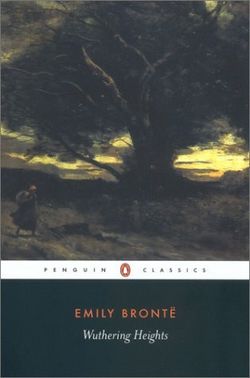
Wuthering Heights is another example where Emily Bronte uses stormy weather consistently to evoke the secrecy and dysfunction integral to the story. The setting – desolate moors – adds to the overall sense of doom as the oppressive weather conspires to keep the characters in doors, thus setting up the crucible from which they cannot escape.

I was reminded of a parallel recently as I read Harry Potter and the Prisoner of Azkaban with my daughter. As Harry prepares for a critical Quidditch match the weather gets more inclement with each passing day. Additionally, Harry’s anti-Dementor lessons are not going well and exams are upon them. All of which contributes to heat up the crucible.

In fact, writers can be rather upfront when bringing on the doom and gloom of howling wind and falling snow. Witness Rowling: “The day before the match, the winds reached howling point and the rain fell harder than ever. It was so dark inside the corridors and classrooms that extra torches and lanterns were lit.”

Sometimes, stating it is the simplest solution – thereafter the brain tacks on the associations that it has learnt over time.

Weather can also be used to indicate a significant change in the story. In the Harry Potter series Christmas falls in the middle of the school term, a time of icy wind and snow and escalating tension! This is invariably followed by Spring and Easter when things start acquiring a degree of clarity as the action hurtles to resolution.

Smilla’s Sense of Snow is one novel I’d recommend to anybody looking to learn how to use weather. In this novel by Peter Hoeg set in the icy harbours of Copenhagen and glacial Greenland, the various forms of snow – apparently the Inuit people have at least nine words to describe ‘snow’ – are used to conjure the mixed-race protagonist’s isolation, the stark terrain, and the overwhelming feeling of aloneness that shrouds the suspenseful narrative.

In my debut novel, Earning the Laundry Stripes, I used the heat and dust of upcountry India to convey the oppressive environment in which my protagonist Noor finds herself as the first woman in an all-boys sales club. The stifling heat adds another onerous layer as she battles the sectarian and macho world of sales and the boondocks.

One warning though: Avoid the Bulwer-Lytton test of purple prose which uses the infamous opening line, It was a dark and stormy night …, as an example.

So, next time you find yourself stuck while writing - When, oh, when will I finish the novel? - turn to the weather. Einstein said, “One need only think of the weather, in which case the prediction even for a few days ahead is impossible”. On that merry thought, do not despair – write daily and you’ll reach the goalpost; meanwhile, some spring or thunder might come in handy!


Meanwhile, do you have any favourite weather scenes you'd like to share? Write in. Cheers!

Wednesday, 25 May 2011

Of Sugar and Spice ...

So folks, I was getting ready to hunker down at my desk for another day of writing when research took me to google the omniscient, and, voila!, I stumbled upon a coverage in The Hindu of my debut novel: Earning the Laundry Stripes.

Writers approach book reviews with trepidation, and rightfully so. As someone said, the decision to have a child is to forever let your heart walk outside your body ... Well, substitute 'child' for 'book' for what else is the process of writing but creation?! And books like children do acquire a life of their own.

So, as I was in the midst of this third book/creation of mine, I came across this delightful review and a warm feeling filled me up. A bit like your moppet returning from school with a report card, which, jeez - mercifully - says things are in order!

"At one level it is a racy narrative which can engage you through the journey of Noor across India's dusty and chaotic hinterland with their ... to a sensitive, searing account of the complex realities of an India divided along gender, communal, class and regional lines. "

Read the complete article below, or at The Hindu

It was published in November 2006 and some of you might have missed it. The book is still available in bookstores in India or you could order it online at Amazon, Flipkart, Friends of Books ...

Enjoy!


Of sugar and spice...

SHARE  ·   PRINT   ·   T+  
The first woman Sales Manager in HLL, Noor Bhalla flounders initially, but soon learns that the best way to do her job is to use her inherent strengths as a woman.
Earning the Laundry StripesBy Manreet Sodhi Someshwar Publishers: Rupa & CoPrice: Rs 195
Rasheeda Bhagat
The five women in the Gujarati distributor's house spend most of their time in the kitchen, and are the first to rise and last to sleep. Says the grandmother with obvious pride: "Feeding a family of 15 is like feeding an army".
The most appealing aspect of Manreet Sodhi Someshwar's
Earning the Laundry Stripes
(published by Rupa & Co) is that it can hold a reader's interest at different levels. The author has transferred her real life experiences sometimes fulfilling but most often harrowing as the first woman ASM in sales at Hindustan Lever Ltd to the protagonist Noor Bhalla. An engineer-cum-MBA (IIM, Calcutta), Noor finds herself in a man's world of sales and is totally at odds with a milieu where her male colleagues watch porn films before presentations or attack liquor with gusto at office parties.
At one level it is a racy narrative which can engage you through the journey of Noor across India's dusty and chaotic hinterland with their
loos
(hot winds of Central India), distributors with their own set of idiosyncrasies who are totally taken aback at the prospect of having to deal with a woman in sales, and the `policeman' More, who blackmails her saying that the man she had thrashed with her handbag filled with a couple of kg of Rin bars, because he had molested her in a public transport bus, was in a coma and might kick the bucket any day.
Noor's journey is interspersed with sexual innuendos from her colleagues and distributors alike, beginning with an old man in Sales at Bombay HLL lecturing her on what misfits MBAs would be in rural sales, and how the "trade retail/wholesale is
manned
by men." As he holds forth on how sales is a "frontier province that requires lean and keen men", he suddenly stops to inquire about her name. `Noor' would make her a Muslim, but `Bhalla' was obviously Punjabi; this puzzles him.
Here is what Manreet's Noor wants to tell him, but of course doesn't: "I am a Punjabi Sardarni who chews screwballs and spits them out. For fun. But what if I were Muslim?
Hanh
?
Hanh
?"
Such passages display the female sales executive's chagrin at personal questions being thrown at her all the time and the communal divisions that rule people's heads and hearts.
The feminist angle
Along the way, as she takes on a myriad of HLL distributors in the hinterland, or accompanies a
firang
HLL executive with élan around Bombay, impressing him with her competence and knowledge, she is devastated to discover the little value that her gender has in rural India. To the extent that in a village in Uttar Pradesh when asked about the number of children the women have, the reply given includes only sons; daughters, apparently, don't count as "children". As their local companion Ram Singh explains: "Daughters are
paraya dhan
from the day they are born all their fathers can do is to collect their dowry... Out of helplessness, some resort to
datura
(poisonous seeds to kill them)".
This is another level of the book, where Manreet the feminist comes through with a sharp focus. Take this passage when a senior colleague gives her another lecture on how incompatible it would be for a woman, "whose whole life" revolves around marriage and children, to be in sales, and advises her to opt for "market research" instead!
When he learns she has a South Indian boyfriend, he goes into a tizzy and says: "You have a penchant for problems", following it up with a
bhashan
on how men are different as boyfriends and husbands.
But as a woman sales executive Noor faces moments of triumph too. In the Gujarati distributor Govindbhai's house, after a meal when she resorts to her trump card of being able, as a woman, to go to the kitchen and talk to the women, she finds that there are five women between 17 and 70 there. They spend most of their time in the kitchen, and are the first to rise and last to sleep. The grandmother informs her with obvious pride that "feeding a family of 15 was like feeding an army", and how she is preparing her granddaughter studying in Class VIII for the task of taking over the kitchen in her husband's house some day!
But Noor is delighted when Govindbhai tells her the girl "is keen to meet a real lady manager as she has never seen one before. You see, she wants to be an engineer when she grows up." And Noor is reminded of the little girl in Etha, UP, "who at eight years, is a surrogate mother and housekeeper; a girl child who will neither get a chance to be a girl or a child".
Communal polarisation in India
Yet another layer of the book mirrors the author's distress at the increasing communal polarisation in India. At an HLL distributor's place in Bombayshe runs into Imran, the child who had watched his entire family being electrocuted to death in the Gujarat riots. The shock turns him into a mental retard. But imagine her horror when the distributor bitterly tells him that he had put his nephew away in a home because the terrorists wanted to use him as a suicide bomber. "The riots had already made the boy an idiot, they claimed. Why not put him to good use? Strap a belt of explosives around him, leave him in the middle of a crowded market and remote-detonate the bomb. Then watch the Hindus die."
Noor also has to contend with communalism at home; her mother is against her marrying the Hindu Siddharth, and says: "Marriage is different from friendship. After blood ties, the ties that count are those you make within your own community. Daily we are seeing riots in India: Hindu-Muslim, Hindu-Sikh, Hindu-Christian because the majority community wants to impose their faith on the minorities. Do not abandon your faith."
Her mother's desperate plea leaves her with many emotions, a prominent one being of the "little boy (Imran) who had screamed in my face and drilled a hole forever in my heart. A little boy who was graded `ammo' in yet another fight for faith."
These are the passages that elevate Manreet's novel from a mere narration of a woman sales manager's travails in a man's world, to a sensitive, searing account of the complex realities of an India divided along gender, communal, class and regional lines. Her ability to deftly mix sensitive and serious issues like gender and communalism with a lot of
masala
, such as finding herself staring into the eyes of a crocodile as she is stranded in a Sumo in flooded Baroda street, her encounters with the colourful More, tales of her batch-mate Kalpana's boyfriend pawing other women, etc, makes the book an absorbing read.
But the punch line is in her discovery that as a woman she can bring special insights into sales and had floundered because she had been looking at it all along from the male point of view. In her learning to "play off my inherent strengths a woman is just so much better than men at some things" lies her nirvana.
Response can be sent to rasheeda@thehindu.co.in

Thursday, 11 March 2010

Earning their political stripes: Women’s reservation bill in India


March 8 is celebrated as International Women’s Day across the world. This year India marked it by tabling the Women’s Reservation bill – which aims to reserve a third of legislative seats for women – in Parliament. However, the bill was torn up by its opponents amidst an uproar. A day later it was cleared but there are still hurdles to be crossed: the lower house of Parliament, Lok Sabha, must pass the bill, then the proposal has to win the approval of at least half of India’s state legislatures, and finally, a sign-off by the President – the last, hopefully, will be a cinch. The President’s post in India is largely ceremonial, and Pratibha Patil, the first woman to be President, has already urged the passage of the bill.

Since its inception in 1996, the bill has had a rocky journey. Opposition has been mounted by conjuring myriad unwelcome consequences of its implementation: increased marginalization of other minority groups such as backward castes and Muslims, the abuse of the reserved seats by male members of the woman’s family, disruption in domestic life. All such arguments are, in fact, ingenious attempts to distract from the central fear: empowering women.

The bill tabled by the Congress-led ruling UPA has garnered support from opposition Communists and rightwing BJP but was opposed by two northern regional parties, members of its coalition. These parties are headed by men who have made their political careers by playing the caste card in states which are populous, poor, caste-ridden, male-dominant, and largely illiterate. One of the states, Uttar Pradesh, with a population of 190 million, is the most populous state in India and if it were a separate country, it would be the world’s fifth largest nation.  

At a previous discussion on the bill Mulayam Singh Yadav, leader of Samajwadi party in Uttar Pradesh, cautioned his fellow parliamentarians championing the bill: “for all the table thumping taking place, you will be thumping your charpoys (string cots) in your homes”. A deep fear prevails that “leadership” – read patriarchal hegemony – will be “destroyed” by the passage of the bill which promises to unleash women onto the political arena. Playing the minority card, they have termed the bill elitist, insisting it should have a quota within quota for backward and Muslim women – further stirring up the state’s caste-heavy cauldron.  

The irony is that both the President and leader of the largest party in India are women. For fifteen years, it was led by a democratically-elected Indira Gandhi, the Iron Lady of India. Inherent in that fact is the contrarian nature of Indian politics, marked by nepotism. Indira Gandhi was the daughter of Nehru, India’s founding father, and the inheritor of his Congress party. What would prevent a similar misuse of power when the women’s reservation is implemented? ‘Proxy’ seats filled by the female relatives of male politicians is a possibility. However, for reference, one can turn to the village and local governments, panchayats, where a reservation of 33 percent for women was implemented in 1993.

Today there are one million elected women leaders in local governments. Several studies have been conducted on the result of increased participation of women. While ‘proxy’ cases have been recorded, it is also seen that panchayats run by women have effectively tackled several areas that had been traditionally ignored: reducing liquor consumption by removing liquor vends, increasing panchayat income by removing encroachment on government land and building shops for rent, installing hand pumps to provide drinking water, setting up maternity homes, providing toilets for women at bus stops. 

The results fly in the face of concerns about women’s ability to serve as effective legislatures. Concomitant with the growth in economic prosperity has been an increasing participation of women in the corporate sphere. ICICI Bank, the country’s largest private bank, is run by a woman. She reached there due to the bank’s policy of actively recruiting women.

According to the Centre for Social Research, women make up 44 percent of the voting population and have less than 10 percent representation in India’s parliament. In a country where fifty million women have gone “missing” a move to ensure their representation will empower women. In turn, they will be more likely to champion women’s causes and serve as role models for other women.

In the mid-nineties when I joined Unilever India after business school I was the first woman recruited into the sales system. The company that sold consumer products targeted at women had over its 150-year presence in India been steered solely by men. With increasing competition, a more sophisticated consumer, and the emergence of women in MBA courses, the company had decided to widen its talent pool and leverage a woman’s perspective. It was a new reality in which male chauvinism was endangered. Later when I started writing full time, I fictionalised my experience as a lone woman in an all-boys sales club to write my first novel, ‘Earning the Laundry Stripes’.

A changing India cannot afford to keep women out of the talent pool of available politicians. The women’s reservation bill is a first step in helping more women earn their political stripes.