Praise for My Books


"Manreet Sodhi Someshwar is a gifted writer of great promise. I have a gut feeling we have a new star rising in Punjab's literary horizon. She has an excellent command of English and a sly sense of humour."
- Khushwant Singh on The Long Walk Home

"An enjoyable tale of a sassy girl's headlong race up the corporate ladder."
- India Today on Earning the Laundry Stripes


Wednesday, 22 June 2011

Weather in fiction, beyond the dark and stormy night …

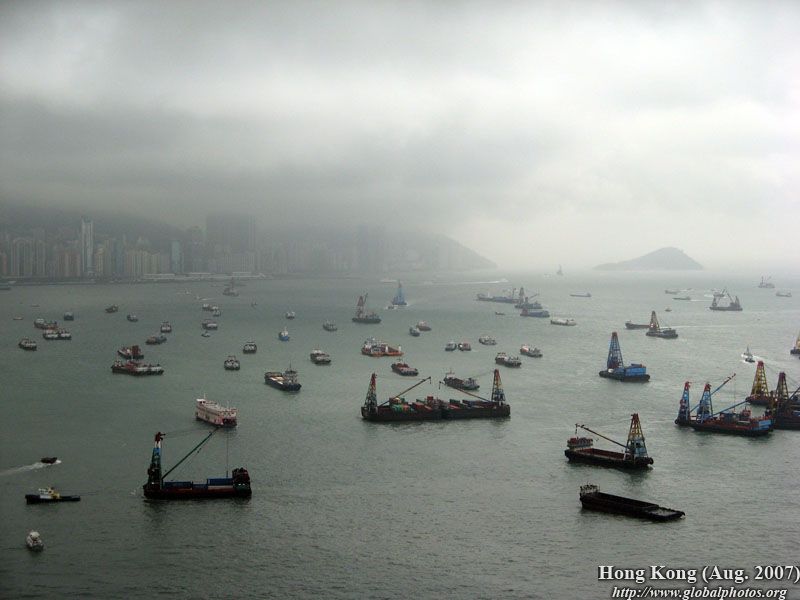
As I sit curled up in bed with a cup of coffee and the IHT, I watch the curtain of gauze shimmer and shake outside my window. It is a T3, a nascent stage of typhoon, and one of the best days to be inside, to enjoy a good read and contemplate the weather. Samosas and other Indian savouries surf in my mind – chana bhatoora would, of course, be just plain excellent, with a fistful of chopped onions and gleaming green chilli … ah! the delights of a rainy day.

Our brains are wired to build associations – new neural connections are created when we encounter something new as we use what we already know to understand what we do not know. If you grew up in India, it is almost certain that you associate rain with either of samosas or pakoras and chai. Which means that even in Hong Kong, my first thought on a typhoonyday is not of steaming dimsums or crispy spring rolls but the savouries I grew up with.

These associations are the same ones that writers leverage when they try to evoke in the reader a particular set of emotions without explicitly stating them. It is the cardinal rule of ‘Show, don’t tell’. And weather is one handy tool that writers and filmmakers leverage. It helps that the common associations of weather are universal. Consider:

Mist/fog – uncertainty
Rain – sorrow, depression, renewal
Sunshine – cheer, brightness, optimism
Thunder – ominous, fearful
Snow – purity, calm, deceptive

Pick up a Thomas Hardy and you’ll spend several pages reading a detailed description of the setting and the weather but in the age of motion pictures we have to be more efficient with the technique. If you are looking to evoke a particular mood for a scene, weather is one tool you can use succinctly. It can also be deployed for the entire length of the book or movie, as Roman Polanski did with his 2010 film, The Ghost Writer.

The film is based on a book by Robert Harris in which a ghost writer is hired to write the memoirs of a British prime minister. The troubled minister, under siege from his wife, the media, his party and the public, has shut himself off on the seclusion of an island off the US east coast. Since the film is a thriller with an overhang of suspense, Polanski uses the mist rolling up from the sea to create a shape-shifting ambience that awakens the viewer to the possibility that everything may not be as it seems. Apparently Polanski shot the film in Germany for its weather and isolation and it works wonderfully for the sense of foreboding that grips the viewer right from the beginning. As Ewan McGregor, who plays the un-named Ghost, said at the film’s debut : “Polanski uses the weather like another oppressive character in the film – it’s always raining, it’s always gray and damp.”

Wuthering Heights is another example where Emily Bronte uses stormy weather consistently to evoke the secrecy and dysfunction integral to the story. The setting – desolate moors – adds to the overall sense of doom as the oppressive weather conspires to keep the characters in doors, thus setting up the crucible from which they cannot escape.

I was reminded of a parallel recently as I read Harry Potter and the Prisoner of Azkaban with my daughter. As Harry prepares for a critical Quidditch match the weather gets more inclement with each passing day. Additionally, Harry’s anti-Dementor lessons are not going well and exams are upon them. All of which contributes to heat up the crucible.

In fact, writers can be rather upfront when bringing on the doom and gloom of howling wind and falling snow. Witness Rowling: “The day before the match, the winds reached howling point and the rain fell harder than ever. It was so dark inside the corridors and classrooms that extra torches and lanterns were lit.”

Sometimes, stating it is the simplest solution – thereafter the brain tacks on the associations that it has learnt over time.

Weather can also be used to indicate a significant change in the story. In the Harry Potter series Christmas falls in the middle of the school term, a time of icy wind and snow and escalating tension! This is invariably followed by Spring and Easter when things start acquiring a degree of clarity as the action hurtles to resolution.

Smilla’s Sense of Snow is one novel I’d recommend to anybody looking to learn how to use weather. In this novel by Peter Hoeg set in the icy harbours of Copenhagen and glacial Greenland, the various forms of snow – apparently the Inuit people have at least nine words to describe ‘snow’ – are used to conjure the mixed-race protagonist’s isolation, the stark terrain, and the overwhelming feeling of aloneness that shrouds the suspenseful narrative.

In my debut novel, Earning the Laundry Stripes, I used the heat and dust of upcountry India to convey the oppressive environment in which my protagonist Noor finds herself as the first woman in an all-boys sales club. The stifling heat adds another onerous layer as she battles the sectarian and macho world of sales and the boondocks.

One warning though: Avoid the Bulwer-Lytton test of purple prose which uses the infamous opening line, It was a dark and stormy night …, as an example.

So, next time you find yourself stuck while writing - When, oh, when will I finish the novel? - turn to the weather. Einstein said, “One need only think of the weather, in which case the prediction even for a few days ahead is impossible”. On that merry thought, do not despair – write daily and you’ll reach the goalpost; meanwhile, some spring or thunder might come in handy!


Meanwhile, do you have any favourite weather scenes you'd like to share? Write in. Cheers!

Friday, 17 June 2011

Meet the Author Event with FIPHK

Hello Folks!

FIPHK (Forum of Indian Professionals in Hong Kong) is organizing a 'Meet the Author Event' with yours truly. If you are in town, do come along.

I'll discuss both my books, drop some dark hints about the upcoming one and the discussion will be adequately lubricated, I am informed, by a healthy dose of masala chai and samosas!


Details as follows in this note by FIPHK:


MEET the AUTHOR Event: Manreet Sodhi Someshwar

Fellow Literati,

You must have often pondered over the “left brain / right brain” dilemma:
Is it all about climbing the corporate ladder? Or is it about fulfilling your creative urges?

On Saturday 18 June 2011, at the FIPHK Literary Group hosts someone who has been there and done that

“Meet the Author – Manreet Sodhi Someshwar”

Come to find out:


• How a corporate executive transformed herself into an author, reviewer, speaker and literary host

• What it takes to be a reviewer and author spanning genres – short stories, historical fiction and now thrillers

• And the road ahead for any aspiring writer
Time
Saturday, June 18 · 3:30pm - 6:00pm

Location
 
Tandoor restaurant, 
1/F Lyndhurst Tower No. 1 Lyndhurst Terrace CentralHong KongChina

Created By

ForFIPHK Literary Group


Thursday, 9 June 2011

La Rambla, Levitating Ganesha, and Lethal Desis – A Barcelona 101


Barcelona, to me, was a sunny Mediterranean city that registered on my consciousness during the 1992 Summer Olympics. Thereafter, as the Spanish economy boomed it became the city to go to, the kind that attracts travel tips from the editors of Conde Nast Traveler.

 All of which was very good until I stumbled upon a book called The Shadow of the Wind by Carlos Ruiz Zafon. Now, I am a writer, and I love all things writerly – the smell of new books, the sound of old pages, the feel of a good pen as it waltzes over white, the strange new worlds that black ink transposes us to – and The Shadow is a very writerly novel.

At its heart is a book – rare, obscure – that falls into the hands of a boy who must protect it because someone is determinedly burning every copy of every book ever written by its author. It features a Cemetery of Forgotten Books – a capacious sanctuary where books are guarded from oblivion, a wise bookseller father, a boy who reads voraciously, and the city of Barcelona.

But the Barcelona of the book is set in the ‘50s, post the Spanish Civil War – a far cry from the sun-kissed widely-advertised Barca of today. The narrative traverses through the labyrinth of Barri Gotic (the nucleus of Old Barcelona) and down La Rambla, as mist rises from the Marina and engulfs the streets. It is a wonderful sprawling Gothic novel and I would recommend it to anybody looking for a book to lose themselves in. (If it helps, it is the highest selling Spanish novel after Don Quixote, and I reviewed its sequel here.) But best of all, it captures the spirit and skeleton of Barcelona better than any guidebook.

Because, even today, the best way to see the city is by strolling down the wide boulevard of La Rambla and careening off into the side alleys which spit you into the maze of the old quarter. Barcelona is at once ancient, medieval, Gothic and contemporary, and all of it can be discovered within a 2-mile radius!

So much so that tourist companies have come up with ‘The Shadow of The Wind Walking Tours’!

So you can imagine my excitement when we landed in Barcelona during Easter break. Especially considering my prior visa travail which I blogged about here, hubby was skeptical about the city that I had been slobbering over – not to mention that we were visiting from Pa-ree, that moveable feast!

We had deliberately chosen to stay in a hotel off La Rambla to ensure we wasted no time in cabs. La Rambla, a broad pedestrian boulevard flanked by narrow traffic lanes, runs down the length of Barcelona’s tourist hub, marks the southwest flank of the Barri Gotic, and is arguably the most famous Spanish street. It takes its name from a seasonal stream (raml in Arabic) that once ran here.

If you can withstand crowds, it is an excellent way to begin sampling Barcelona – throw yourself in and go with the flow. Start from Placa de Catalunya, named after a drinking fountain, a drink from which is rumoured to return you to Barcelona. Not a bad premise, but considering the swathe of pigeons that flock the fountain, you might just want to make a wish in your heart J Don’t get distracted by the stores all around – El Cortes Ingles, Barcelona’s Selfridges will be towering over you – there’ll be time for that later. This is also the place for celebration by fans when FC Barca wins, and the place to book and board the popular Bus Turistic for an open-top ride through the city.

Hang around, experience the place, then head southwards on La Rambla. If the UN had a bazaar it would be like this: multiple languages at once bouncing off hawker wares, flowers sellers, bird cages, fresh produce and intriguing buskers.

We saw several characters out of Pan’s Labyrinth, and … a levitating Ganesha! See it for yourself. Suffice to say he had a large audience and hubby’s mechanical engineering skills were challenged as he tried vainly to figure how the man was managing to stay afloat. I was happy to assign the mystery to the Goth character of the city.

And as we thus happily strolled down I overheard my mother tongue with all its lavish expletives – an excited Punjabi youth told another how they had beaten the Bengalis the previous night! Gulp! Even outside of India what identifies an Indian is our cantankerous interactions with our own countrymen. Now I have many Bengali friends and publishing is full of Bong editors but I have been aware of the strange Bong-Punj animosity. When I joined IIM Calcutta a Bong friend cheekily informed me of a popular expression: “Pagol na Punjabi”. Meaning, are you mad or simply Punjabi? Then he proceeded to add that ‘Punjabi’ was a euphemism for ‘Sardar’. And for an average Punjabi, a Bengali is at the dismal other end of the martial scale. So it shouldn’t surprise me to overhear that conversation a thousand miles from home. 1.2 billion of us are bound to show up through the cracks around the world and when we do, we are like this only!

Further on, we stumbled upon Miro’s mosaic. If I hadn’t been looking out for it, I’d have – like most other pedestrians – walked blithely over it, unaware that the famous painter had created a large circular tiled mosaic in the middle of La Rambla. Look for the Liceu metro and you’ll find it. One tile is signed by the artist and I was able to locate it!

What did Miro have in mind when he created the pavement mosaic? People trample over it, and every now and then someone notices it and pauses, or reaches it after scouring La Ramblas and gazes in awe … Either way, the mosaic is an integral part of the bustling boulevard.

Miro said, “Poetry and painting are done in the same way you make love; it’s an exchange of blood, a total embrace – without caution, without any thought of protecting yourself.”

Perhaps that explains why Miro put his art at the feet of the public.

I will continue this post in a series – Barca is too much of a good thing to squeeze into one blogpost. So watch out for the next one where I shall take you into the ancient heart of the city, the Barri Gotic. Meanwhile, if you figure the secret of the levitating Ganesha, do write in.

Cheers!

Wednesday, 1 June 2011

Is a Cool Chick Hot or a Hot Chick Cool? The Beauty Debate


Beauty comes in many avatars – the smell of first rain, a bellyful of laugh, the patter of toddler feet, Michelangelo’s Pieta, Taj Mahal, mother’s face, the written word, a melodious ghazal – and yet, when the word is mentioned what springs to the minds of most people is female physical beauty. Since that aspect of beauty hogs the mind share, let’s address it first.

A young woman has a great time partying with her friends. Once back in her apartment, she heads straight to the bathroom where she puts a finger down her throat. Scraping it right in, she hits the gag spot. This wrenches her stomach and she throws up. So, she got to eat and drink copiously but she purged her body, and there’s no weight gain. Problem solved!

Or is it?

She is heading to bulimia nervosa, and while she’ll not gain weight she’ll gain myriad other ailments: eroded teeth, sore throat, ruptured esophagus, weakened heart muscle- what, you want me to stop! Okay, but know that bulimia is classified as a disorder.

Question is: how did she get into it?

Because she wants to be beautiful, and thin is in. Besides, if she didn’t starve herself, how would she fit into that ubiquitous bandage dress?

She is drowning in a sea of images, of long-legged high-heeled divas who have poured themselves into these skin-tight sheaths while she, in her flowing salwar kameez, has abruptly acquired the proportions of a tent.

Kareena Kapoor’s size 0. Bipasha’s yoga-sculpted body. Shilpa’s sexy figure. Katrina Kaif as the face of Indian Barbie. Ahem!

Our Prime Minister, when he was the Finance Minister in 1991, launched India into the age of economic liberalization. Since then we have opened our borders, become a tiger economy, and since any economy that grows at an 8% clip needs domestic consumption, we are consuming voraciously. As we joined a globalizing world what came in its wake was a relentless assault of images – images transplanted from the developed world to the developing as a marker of what we can aspire to.

And when Kate Moss is the iconic model to have graced the cover of Vogue a record 30 times you know what I mean. When rail-thin models whose spine could be felt through their stomachs define beauty, a herd of anxious women follow. Barbie, the cherished toy for all little girls in the new India, is so ridiculously proportioned that if scaled up to human size she would be unbalanced enough to topple over! Apparently the likelihood of a woman having Barbie’s shape is one in 100,000. For the rest, well, there is anorexia, bulimia, dieting, as they worship at the shrine of unachievable beauty.

How did we reach this point of killing ourselves to attain some beauty badge?

First, lets acknowledge to ourselves that the images we see are of models that are used to sell products. It is purely commercial. And over the years, the models have changed because of a changing fashion aesthetic that in turn is controlled by marketers, advertisers, stylists – people who run the beauty business. Consequently, images that sell everything from cars to cigarettes come to define beauty in that day and age.

Don’t believe me? See for yourself.

In the ‘60s Twiggy, with her androgynous looks, became the ideal mannequin for the mod looks of that decade. While the Russian Veruschka – once considered too tall, at more than six feet – played up her Valkyrie proportions by occasionally appearing in nothing but body paint. Modern times, eh!
In the ‘70s Iman, the stunning Somalian, became the exotic appeal. The ‘80s were all about glamour and Australian Elle Macpherson “The Body” defined it. Cindy Crawford, fresh-faced American, was symbolic of the pared-down minimalism of the ‘90s.

Then arrived Kate Moss – at five foot eight she was the antisupermodel whose arrival heralded the waif look. Which, in turn, spawned a legion of healthy women starving themselves to attain the Fellowship of Moss.

What does it tell us? In this obsessive pursuit of beauty are we missing something staring us in the face? That the idea of commercial beauty is constantly changing, at best, and shifty, at worst, as marketers have crossed continent/ethnicity/race in their search for the ‘look’ that’ll define the zeitgesit of the era and convey an impossible beauty.

No woman can live up to the ideal beauty, though many have died trying to do so. (Ironically, the universally admired beauty, Marilyn Monroe, is one.) That’s because supermodels, fashion models, catwalk models are not meant to be ‘pretty’ or beautiful. The requirement is for edgy, distinctive, non-traditional looks. Which can then be broadcast as some unattainable ideal of beauty. Which, statistically, is what it is!

And yet, as science will tell you, it is all so wrong. Because Beauty boils down to a simple average. Yes, average!

Research has illustrated a phenomenon called beauty-in-averageness in which a composite of faces – essentially an average of those faces – was more attractive than any of the faces individually. Which shows that we humans are attracted to average beauty more than individual beauty. An explanation for this is that averageness is a sign of health and fitness – a quality that attracts the opposite sex for successful breeding. Unusually protuberant eyes might clue a disease – and so signal the (low) value of a potential mate. And yet, a Smeagol-like face with bulging eyes is popular on current catwalks.
                       
The world is a confusing place when white people prize mocha skin and the brown folks want fairness creams; when you are a curvy woman whose body is ideal for a sari but you want to pour yourself into a bandage dress; when you are a Chinese woman with radish legs and you’ll undergo torturous surgery to get European legs …

So, next time you doubt your beauty, stop and think. If you think you are average know that you are beautiful – you have science on your side. Not sufficient? A tad too dry for conviction?

Look at nature for inspiration. Does a rose desire to be more like a narcissus? Is a palm more attractive than a peepul? Is dusk more alluring than dawn? A full moon or a crescent? Each element is there and content in its beauty – no one’s faking it. If there’s one thing we can learn from nature, it is this: there is no beauty standard.

The moment we stop benchmarking ourselves against some given beauty-industry/fashion-magazine/Holly-Bollywood standard is the moment we can look at ourselves in the mirror and realize our own beauty. Confucius said: Everything has beauty; not everyone sees it. So how about sending some positive vibes to our self? Healthy skin, clean teeth, clear eyes, a wide smile, erect posture, wearing clothes that suit our body – 90% of beauty is covered there. And all of us can have it. Exercise, eating well and in moderation will keep us healthy and fit. Top it off with a quiet self-confidence.

Real beauty is within each of us and the moment we start believing that, it lights up our soul and our eyes and our face and becomes visible to all. And then it will extend to our work, our interactions with others, the way we live. Beauty is never skin deep  – it is an extension of our very self. As Professor Denis Dutton says, prehistoric man was creating objects of beauty before we could even talk.

The first step to real beauty is choosing to be You – you with all your foibles and strengths. And then you’ll be surprised by what your self will reveal to you.

So, who will you be: Kat/Kate/Kareena-counterfeit. Or the authentic you? The choice is yours. Is a cool chick hot or a hot chick cool – for once, the chick shall decide!


--------------------------------------------------------------------------------------------------------------------------------
I wrote this blog post because I believe in the need for a passionate debate on the idea of beauty and how we use it to constrain ourselves. This also forms part of the ongoing debate on Beauty that Dove is running via its Yahoo! Dove Real Beauty Contest


If you like this post sign into Indiblogger and vote for it here :)
Alternatively, if you are not an Indiblogger, you can click on the Facebook "Like" button and encourage readership.


Cheers!