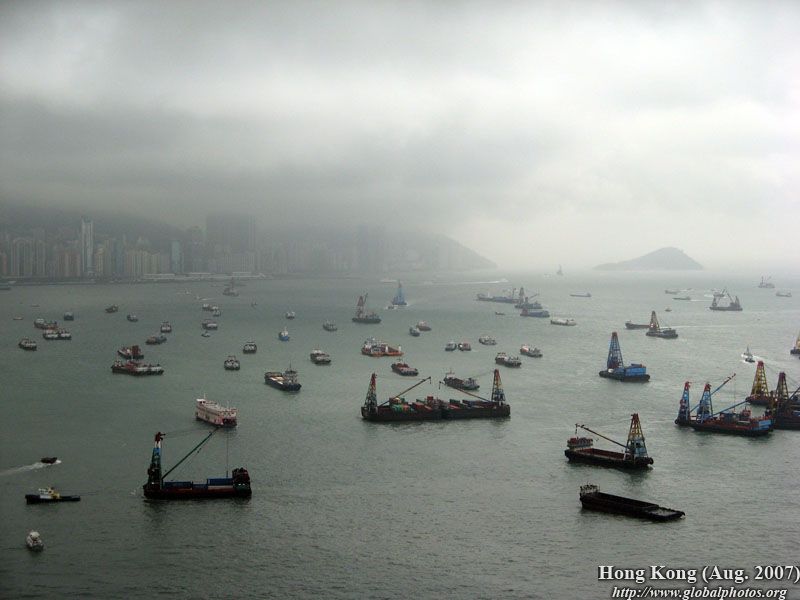
As I sit curled up in bed with a cup of coffee and the IHT, I watch the curtain of gauze shimmer and shake outside my window. It is a T3, a nascent stage of typhoon, and one of the best days to be inside, to enjoy a good read and contemplate the weather. Samosas and other Indian savouries surf in my mind – chana bhatoora would, of course, be just plain excellent, with a fistful of chopped onions and gleaming green chilli … ah! the delights of a rainy day.
Our brains are wired to build associations – new neural connections are created when we encounter something new as we use what we already know to understand what we do not know. If you grew up in India, it is almost certain that you associate rain with either of samosas or pakoras and chai. Which means that even in Hong Kong, my first thought on a typhoonyday is not of steaming dimsums or crispy spring rolls but the savouries I grew up with.
These associations are the same ones that writers leverage when they try to evoke in the reader a particular set of emotions without explicitly stating them. It is the cardinal rule of ‘Show, don’t tell’. And weather is one handy tool that writers and filmmakers leverage. It helps that the common associations of weather are universal. Consider:
Mist/fog – uncertainty
Rain – sorrow, depression, renewal
Sunshine – cheer, brightness, optimism
Thunder – ominous, fearful
Snow – purity, calm, deceptive
Pick up a Thomas Hardy and you’ll spend several pages reading a detailed description of the setting and the weather but in the age of motion pictures we have to be more efficient with the technique. If you are looking to evoke a particular mood for a scene, weather is one tool you can use succinctly. It can also be deployed for the entire length of the book or movie, as Roman Polanski did with his 2010 film, The Ghost Writer.
The film is based on a book by Robert Harris in which a ghost writer is hired to write the memoirs of a British prime minister. The troubled minister, under siege from his wife, the media, his party and the public, has shut himself off on the seclusion of an island off the US east coast. Since the film is a thriller with an overhang of suspense, Polanski uses the mist rolling up from the sea to create a shape-shifting ambience that awakens the viewer to the possibility that everything may not be as it seems. Apparently Polanski shot the film in Germany for its weather and isolation and it works wonderfully for the sense of foreboding that grips the viewer right from the beginning. As Ewan McGregor, who plays the un-named Ghost, said at the film’s debut : “Polanski uses the weather like another oppressive character in the film – it’s always raining, it’s always gray and damp.”
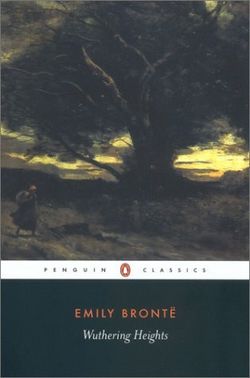
Wuthering Heights is another example where Emily Bronte uses stormy weather consistently to evoke the secrecy and dysfunction integral to the story. The setting – desolate moors – adds to the overall sense of doom as the oppressive weather conspires to keep the characters in doors, thus setting up the crucible from which they cannot escape.
I was reminded of a parallel recently as I read Harry Potter and the Prisoner of Azkaban with my daughter. As Harry prepares for a critical Quidditch match the weather gets more inclement with each passing day. Additionally, Harry’s anti-Dementor lessons are not going well and exams are upon them. All of which contributes to heat up the crucible.
In fact, writers can be rather upfront when bringing on the doom and gloom of howling wind and falling snow. Witness Rowling: “The day before the match, the winds reached howling point and the rain fell harder than ever. It was so dark inside the corridors and classrooms that extra torches and lanterns were lit.”
Sometimes, stating it is the simplest solution – thereafter the brain tacks on the associations that it has learnt over time.
Weather can also be used to indicate a significant change in the story. In the Harry Potter series Christmas falls in the middle of the school term, a time of icy wind and snow and escalating tension! This is invariably followed by Spring and Easter when things start acquiring a degree of clarity as the action hurtles to resolution.
Smilla’s Sense of Snow is one novel I’d recommend to anybody looking to learn how to use weather. In this novel by Peter Hoeg set in the icy harbours of Copenhagen and glacial Greenland, the various forms of snow – apparently the Inuit people have at least nine words to describe ‘snow’ – are used to conjure the mixed-race protagonist’s isolation, the stark terrain, and the overwhelming feeling of aloneness that shrouds the suspenseful narrative. In my debut novel, Earning the Laundry Stripes, I used the heat and dust of upcountry India to convey the oppressive environment in which my protagonist Noor finds herself as the first woman in an all-boys sales club. The stifling heat adds another onerous layer as she battles the sectarian and macho world of sales and the boondocks.
One warning though: Avoid the Bulwer-Lytton test of purple prose which uses the infamous opening line, It was a dark and stormy night …, as an example.
So, next time you find yourself stuck while writing - When, oh, when will I finish the novel? - turn to the weather. Einstein said, “One need only think of the weather, in which case the prediction even for a few days ahead is impossible”. On that merry thought, do not despair – write daily and you’ll reach the goalpost; meanwhile, some spring or thunder might come in handy!
Meanwhile, do you have any favourite weather scenes you'd like to share? Write in. Cheers!